Germs are one of the top three entities that have shaped the human experience over the last few thousand years. From the plague to malaria to the common cold, history has proven how disruptive and deadly microbes can be. These tiny organisms have contributed to significant social and economic changes, prompting advancements in medicine, public health policies, and sanitation practices. But even with all our experiences, we sometimes neglect protecting ourselves, in this case our water, from microbial risk. Access to clean water is often taken for granted, yet it is essential for our health and well-being. One reason we lose engagement when it comes to microbial management in water systems is due to size and time. What I mean is the threat is too small to see, and their impact may not be felt for weeks after exposure, making it easy for many to overlook the importance of ongoing vigilance in maintaining our water quality. As pathogens silently proliferate, the consequences can escalate into serious health crises, underlining the need for increased awareness and preventive measures.
If people can’t see threats, they generally tend to ignore them—even if they know they’re there. The average human eye can only see down 40-50 microns—think dust particles that float through the air and settle on surfaces without us noticing. So, at 10 microns or less, microbes are definitely off the radar, operating in a realm that eludes our immediate perception. This invisibility is particularly concerning when we consider the potential consequences of these microorganisms. When it comes to impact, fast-replicating viruses can induce symptoms in as little as 12 hours, which makes them insidiously effective, while bacteria like Listeria may not create any signs of distress until as much as 2 months after exposure. The question remains: how many people could accurately correlate something they ingested a few months ago to feeling ill today? This lack of awareness not only complicates diagnosis but also contributes to the cycle of misunderstanding surrounding food safety and microbial threats. Furthermore, how do we effectively demonstrate that a threat is present and that our treatment is working? To tackle these concerns, I present to you the HPC test, a tool designed to bridge the gap between perception and reality in microbial risk assessment.
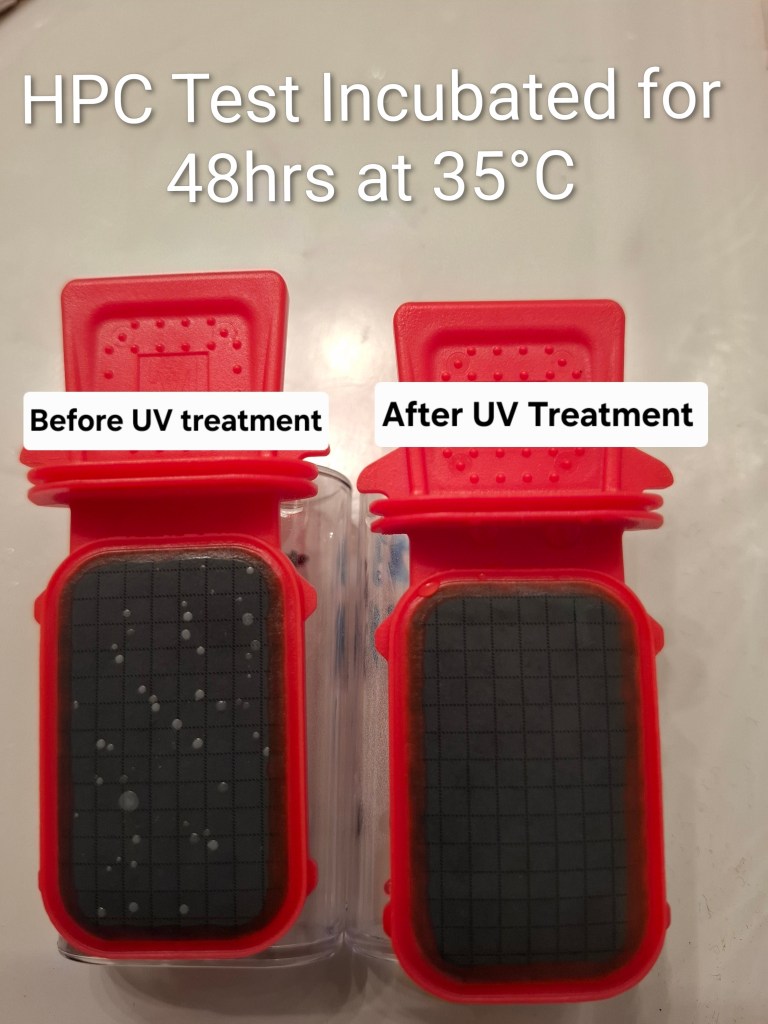
The image illustrates bacteria growth results from a customer’s water source, with untreated water showing colonies on the left and no colonies after UV treatment on the right. This contrast highlights the effectiveness of the UV treatment process. HPC tests, or heterotrophic plate count tests, assess water contamination levels without identifying specific bacteria types, which makes them common in dental practices to evaluate sanitization effectiveness. These tests are essential in providing valuable insights into the overall microbial load present in the water supply if it be upstream or downstream.
At WetWork, we perform simple bioburden tests to ensure the water system and disinfection are performing as they should. Once customers are able to see a clear visual of the risks and their neutralization, they feel much more confident in the effectiveness of our services. Understanding the significance of these results empowers them to take proactive steps in maintaining their water health. Don’t just take a chance with your water’s health; actively get after it to make sure it stands up, safeguarding both your well-being and that of your loved ones. Get connected with WetWork today to experience peace of mind knowing you have a reliable partner in maintaining the safety and quality of your water supply.
 Wet Work
Leave a comment